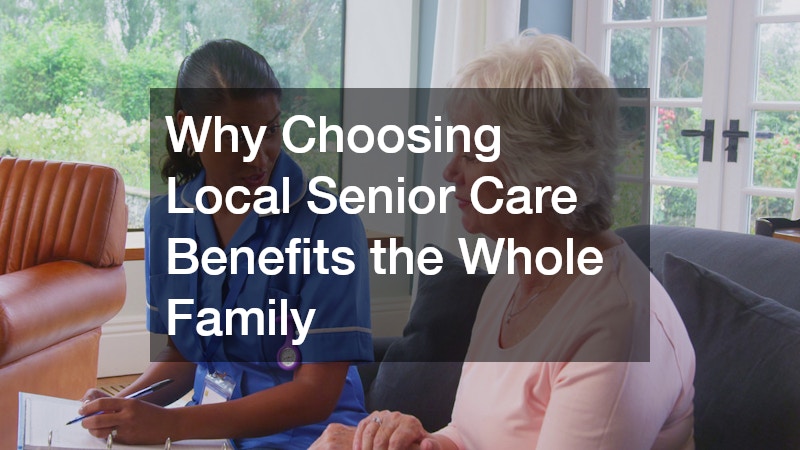
Why Choosing Local Senior Care Benefits the Whole Family
Deciding on the best path for an aging family member is one of the most significant transitions a household can face, requiring a delicate balance of safety, medical necessity, and emotional comfort. Many families initially feel overwhelmed by the vast array of national healthcare chains and distant facilities, but there is a profound sense of peace that comes from exploring local senior care options that keep a loved one rooted in their own community. By prioritizing localized support, families can ensure that their loved ones receive high-quality attention without feeling isolated from the people and places they have known for decades.
Maintaining Vital Connections With Family Members
The most immediate benefit of local senior care is the ability for family members to remain an active and spontaneous part of a senior’s daily life. When care is provided nearby, visits do not have to be orchestrated as major weekend events; instead, they can be integrated into the natural flow of the week, such as a quick stop after work or a morning coffee.
This consistency prevents the feelings of abandonment or isolation that often plague seniors who are moved to distant facilities or who live far from their primary support network. Maintaining these frequent, low-pressure interactions ensures that the emotional bond between generations remains vibrant and that the senior continues to feel like a valued member of the family circle.
Ensuring Rapid Response Times During Emergencies
In the world of senior health, time is often the most critical factor when addressing sudden illnesses, falls, or household accidents. Utilizing a nearby service provider ensures that help is never more than a few minutes away, which can be the difference between a minor incident and a major medical crisis. Local providers are intimately familiar with the neighborhood’s layout, traffic patterns, and emergency services, allowing them to navigate the area with a level of speed and efficiency that a centralized, distant office simply cannot match. This rapid response capability provides an immense sense of security for both the senior and their relatives, knowing that a trusted professional is always within reach.
Utilizing Familiar Medical and Community Resources
One of the most overlooked benefits of localized care is the ability to maintain the existing network of doctors, specialists, and community services that the senior has trusted for years. Moving away or choosing a distant provider often necessitates a total overhaul of a medical team, which can lead to fragmented records and a loss of the “shorthand” communication that develops over a long-term patient-provider relationship. Local care allows a senior to keep their preferred pharmacist, their long-time primary care physician, and their specialized therapists, ensuring a continuity of care that is vital for managing chronic conditions. This familiarity reduces the anxiety and cognitive load often associated with meeting new medical professionals in an unfamiliar setting.
Reducing Travel Stress for Visiting Relatives
The physical and financial burden of travel can quickly lead to caregiver burnout, especially when family members are trying to balance their own careers and households with the needs of an aging parent. When care is localized, the time and money spent on gas, tolls, and long-distance driving is virtually eliminated, allowing relatives to dedicate their energy to meaningful interaction rather than navigation. This reduction in logistical stress makes the caregiving journey much more sustainable over the long term, preventing the resentment and exhaustion that often occur when family members must travel hours every weekend to provide oversight or companionship.
Supporting the Emotional Well-Being of Seniors
For many seniors, their identity is intertwined with their neighborhood, their garden, and the local shopkeepers they interact with daily. Localized care respects this attachment, allowing the senior to age in place with the dignity of someone who is still part of their own story. The emotional trauma of “relocation stress syndrome” is avoided entirely when a person can remain in a space where they feel safe and in control, supported by professionals who understand the local culture and environment.
By keeping support systems close to home, families create a resilient network that can adapt to challenges with speed, empathy, and efficiency. This approach honors the senior’s past by allowing them to stay in the community they helped build, while securing a future that is defined by safety and frequent, loving interaction. Investing in local resources is the most effective way to provide a loved one with a high-quality life that is rooted in familiar soil and surrounded by the people who matter most.